 Daepak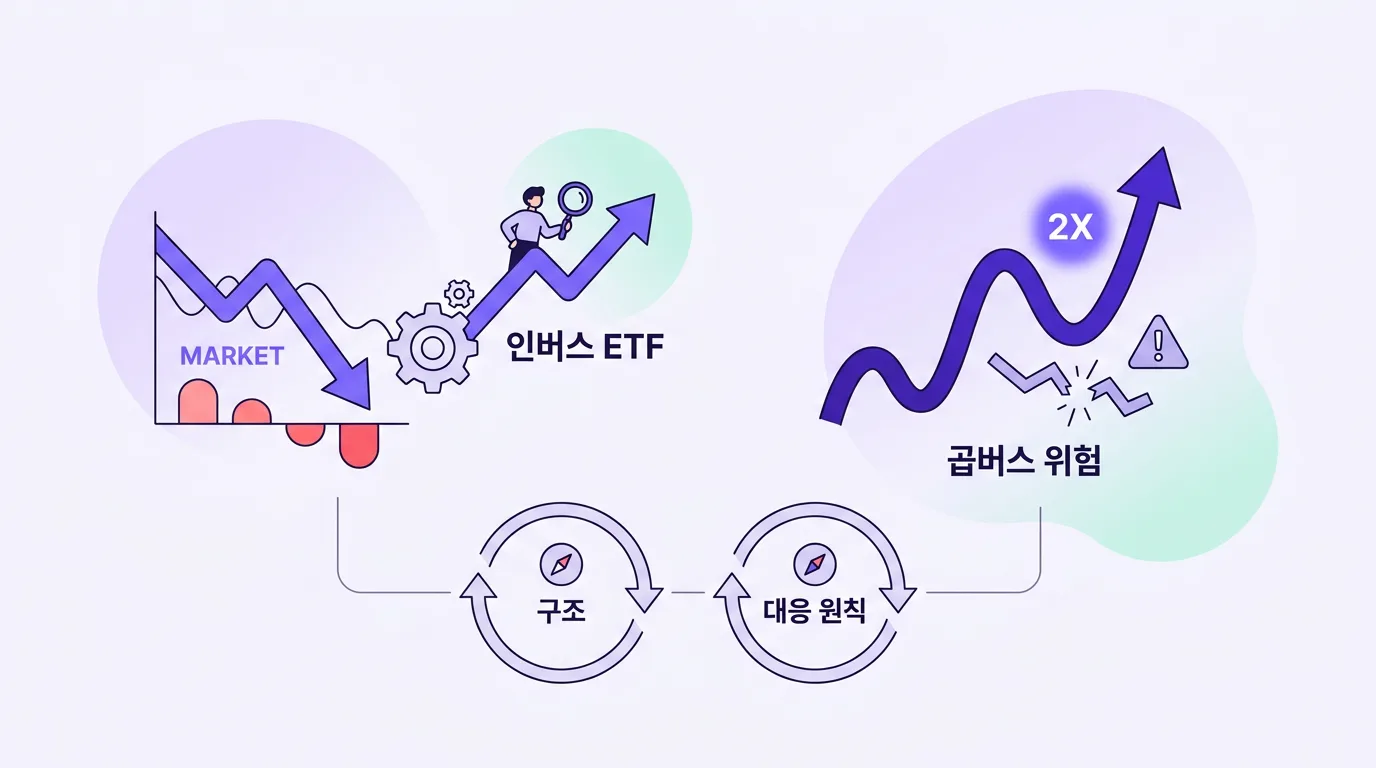
When the index shakes, talk of inverse ETFs comes back. "You make money when it falls" is an appealing line. There is a condition attached.
Inverse vs. 2x bear: the difference is the multiplier, not the direction
An inverse ETF is built to mirror the daily return of an underlying index in the opposite direction. If the index drops 1%, the product rises about 1%. The 2x inverse ETF (곱버스) adds a multiplier. It moves roughly twice as much on the same decline.
The key word is daily. It is not the inverse of the cumulative return over a month or a year.
The illusion created by daily rebalancing
Inverse ETFs reset their exposure at each day's close. Through that process, the product's price does not return to where it started even when the index does. The more the index swings up and down, the wider the gap grows. This is called negative compounding, or volatility decay.
This is where an investor gets the direction right and still loses money. It is also why a sideways market is especially bad for a 2x inverse ETF.
Three numbers filter out half the candidates
- Total expense ratio: the cost you pay while holding. When several products track the same index, this figure differs.
- Trading volume: thin volume pushes the price against you when you buy or sell. The risk of missing your price grows.
- Premium/discount ratio (괴리율): how far the market price sits from the actual net asset value. The wider it is, the more you are overpaying.
All three are visible right on the order screen.
Where people go wrong when the decline drags on
Switching into an inverse product during a selloff involves a time lag. Enter after the drop has begun, and a single bounce can trigger a large reversal. Because the product resets daily, structural losses pile up the longer you hold.
Three checkpoints keep coming up among professionals.
- Have you sorted out whether this decline lasts a day or is a trend?
- Have you set an exit rule in advance, independent of your entry price?
- Have you worked out your cash weight and tolerable loss range first?
Without answers, a correct call on direction still ends badly.
These are timing tools, not holdings
Inverse and 2x inverse ETFs are closer to a bet on one day's direction. They are not built to be held long. Note too that volatility itself widens when tightening worries overlap with oil and rate pressure. For the broader risk appetite, check something like the US 10-year Treasury yield guide first.
To watch alongside assets that trade 24 hours, you can overlay the volatility trend at BTC live price. Daepak's dashboard (/app) compares index, FX and crypto metrics on one screen.
This article is reference material, not a trading instruction. The decisions and the outcomes belong to the reader.