 Daepak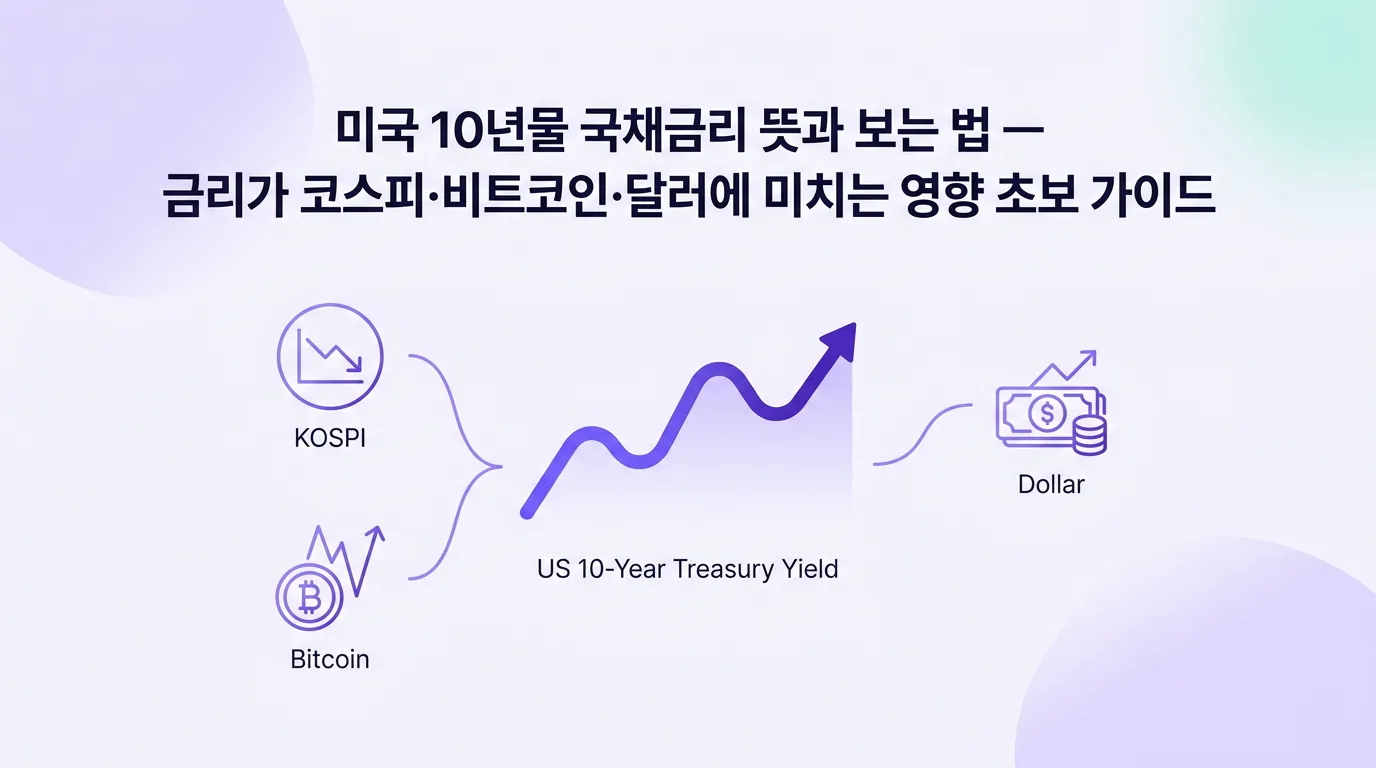
The 10-year Treasury yield, in one line
The US government borrows money for 10 years, and this is the annual interest rate it promises to pay. The maturity is 10 years, so it is the "10-year." This rate is the reference point for asset prices around the world. It stands in for the return you can earn with no risk — the risk-free rate.
One point that trips people up. Treasury yields and Treasury prices move in opposite directions. When bonds are sold, the price falls and the yield rises.
Why rising yields shake growth stocks
A stock's value comes from converting future profits into today's money. The discount rate used for that conversion is the Treasury yield.
When yields rise, the discount rate grows. Profits sitting further in the future get cut by more. Growth stocks, whose earnings are piled up far ahead, wobble first. That hits semiconductors, AI and biotech names hardest, where expectations are already priced in.
The KOSPI follows the same route.