 Daepak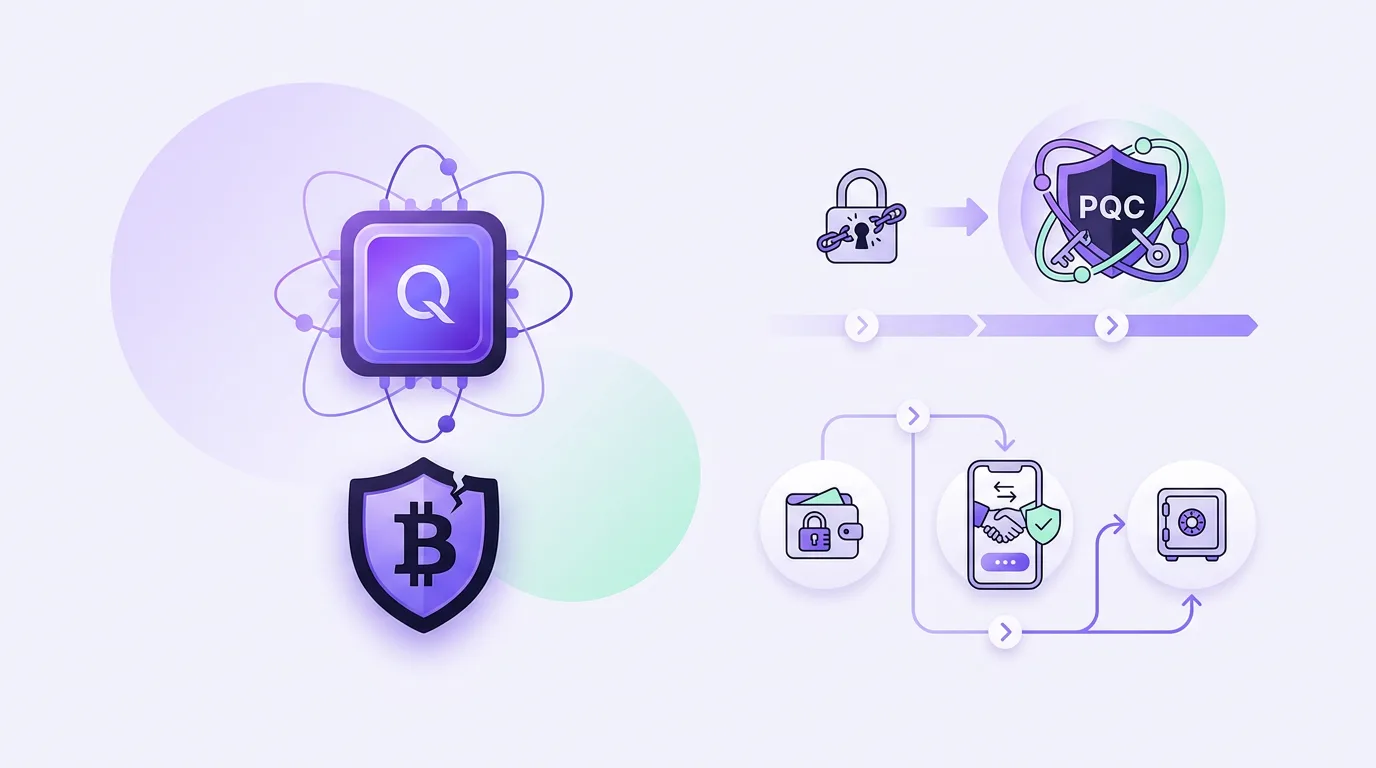
Bitcoin is slipping around the $77,000 line. Meanwhile, a question has arrived from outside the market: quantum computers. An experiment published by an IonQ research team on September 10, 2026 sits at the center of the argument.
The number IonQ put on the table
The team ran Shor's algorithm on 19,397 physical qubits. It reported that secp256k1, the 256-bit elliptic curve cryptography Bitcoin uses, could be broken in about 25.7 days. On the numbers alone, that sounds threatening.
There are conditions attached. Quantum computers on the market today run at tens to hundreds of qubits. That is orders of magnitude away from 19,000. The gap between a lab result and a real attack opens up right here.
Shor and Grover aim at different targets
Shor's algorithm goes straight at public-key cryptography. ECDSA, the signature scheme behind Bitcoin wallets, falls in that category. The mathematical assumption protecting private keys is what comes under strain.
Grover's algorithm works differently. It lowers the effective strength of hash functions and symmetric-key ciphers. SHA-256 is caught in that group. Still, it does not break them in one stroke the way Shor does.
bc1q addresses, where the public key stays hidden
Bitcoin's address structure is another variable. In a bc1q address, the public key sits behind a hash. If you never reuse an address, the window in which the public key is exposed stays narrow. That is why some analysts call this setup relatively favorable.
It is not full quantum resistance. The real fix means replacing the signature scheme itself.
What PQC means and the migration debate
PQC stands for Post-Quantum Cryptography. It describes encryption designed to stay hard to crack even with quantum machines. Standardization work is underway, and Google has named 2029 as its target for a quantum-safe transition.
Exchanges and wallet providers are preparing software upgrades and protocol changes. Address migration at the Bitcoin network level is a different pace, because it requires consensus.
What individuals should check now
Advice from experts tends to cluster into three points. First, keep long-term holdings in a cold wallet and avoid reusing addresses. Second, check whether your exchange or custodian has published a PQC migration plan. Third, watch wallet firmware and security update notices on a regular schedule.
Fear tends to arrive first. Preparation comes after.
The market is still looking elsewhere
Today Bitcoin traded at $77,107, down 1.67% over 24 hours. Ethereum sat at $2,458, Solana at $99.67 and XRP at $1.348, with altcoins falling alongside. Quantum computers are not the cause. The drop came from renewed inflation worries, a sharp rise in US Treasury yields and Middle East geopolitical risk stacking up together.
Live prices and AI scores are on the Bitcoin page, and the share price path of related name IonQ is worth a separate look. If you want rates and currency moves in the same frame, see the Kospi pre-open checkpoint.
It helps to hold the speed of technical progress and the pace of response side by side. The Daepak dashboard (/app) lines up live crypto and US stock metrics on a single screen for comparison.
This article organizes context for your own judgment rather than telling you to trade. Whatever you decide with your money, and whatever follows, is on you.