 Daepak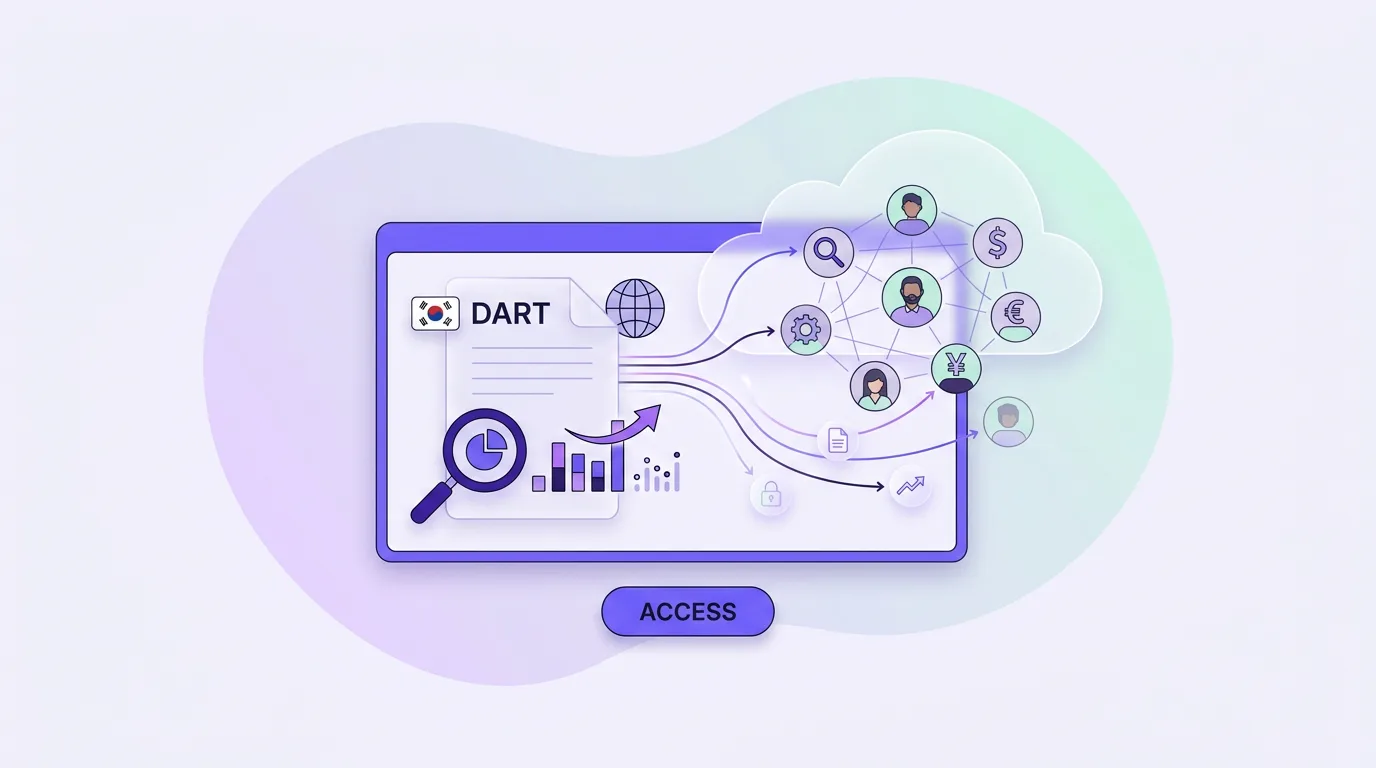
Every Samsung Electronics figure on an English data terminal began as a Korean document filed with DART. A vendor translated it, or summarized it. The original table is still there. That is the point of this guide.
DART is not optional for Korean issuers
DART stands for Data Analysis, Retrieval and Transfer System. Korea's Financial Supervisory Service runs it. Any listed company in Korea must file there, electronically, and the filings are public. So the disclosure is not a courtesy. It is a legal obligation.
That matters for one reason. English-language data vendors pull Korean numbers from DART filings. They rarely show you the source document. When a headline number looks odd, DART is where you check it.
The filings that carry the numbers
Four categories cover the basics.
The annual business report. In Korean it is a sabop bogoseo (사업보고서). It holds audited financials, segment revenue, risk factors and related-party detail. Samsung Electronics' 2025 business report runs 358 pages and about 10MB. It states that consolidated statements follow K-IFRS 1110. Nobody reads all of it. You read the segment table and the notes.
The corporate governance report. Ownership lives here. A typical one is 60 to 80 pages, roughly 2MB. One LG Chem governance report shows the largest shareholder at 30.09% and minority shareholders at 56.76%, with the business type marked non-financial. That single line tells you who controls the company and how much float exists.
Major shareholder and treasury stock filings. These arrive as events, not on a calendar. A stake crossing a threshold, a buyback, a cancellation of treasury shares — each gets its own filing. English coverage often lags these.
Affiliate and group disclosures. Group filings matter too. Korean conglomerates file group-level items. If you only read the listed entity's report, you miss intra-group revenue that can flatter or distort margins.
Reading a Korean filing without Korean
You do not need fluent Korean to pull the numbers.
Numbers are numbers. Financial tables use Arabic numerals and standard line items. Learn five words and you can find most of what you need: revenue, operating profit, net income, total assets, total liabilities. Machine translation handles narrative sections well enough for a first pass. That is enough to start.
Page count is a signal. A 358-page report is a company with many segments and many related parties. A 60-page governance report is a simpler structure. Compare the two and you learn where complexity sits.
The DART site itself offers a viewer. Search by company name in Korean, or by the six-digit stock code. The code is the same. It is the one you see on any Korean quote page.
What the numbers hide
A Korean robotics-themed listing put a robot reducer at the center of its story. Its DART business report did not contain that line item at all. Not zero revenue — no row. The same report showed cash down 88% over three years. Headlines covered the theme. The filing covered the cash.
That gap is the whole reason to read source documents. Vendors index what is filed. They do not flag what is missing.
Same logic applies to Samsung and SK hynix. Their semiconductor revenue is filed, audited, and broken out by segment. If a headline number for either name looks inconsistent with the last filing, trust the filing until proven otherwise.
A working routine
Pick the companies you actually track. For Korean equities that usually means Samsung Electronics and SK hynix first. Pull the latest annual report and the latest governance report. Save both as PDFs.
Then set a habit. Before any earnings-driven trade, open the most recent filing and confirm the segment split. Check the governance report quarterly for ownership changes.
Cross-check with live quotes. A price page shows what the market did. The filing shows why the business can. Samsung's live price and AI analysis sits alongside SK hynix's, and both read better once you know the filing behind them.
For context on how Korean exchanges behave on volatile days, the circuit breaker and sidecar guide covers the mechanics.
Why the lag exists
Translation takes time. Event filings arrive without warning, often after Korean market hours. A vendor's English summary may be a day behind the original. If you trade Korean names around disclosure dates, that gap is your edge or your risk, depending on which side you are on.
Between filings, price often moves before the document lands. Watching that gap is where the Daepak dashboard at /app is useful — it shows whether the tape is running ahead of what has actually been disclosed.
Quick reference
| Filing | What it answers | Typical size |
|---|---|---|
| Annual business report | Full-year financials, segments, risk factors | 358 pages, 10MB (Samsung 2025) |
| Corporate governance report | Ownership, largest shareholder, float | 60–80 pages, ~2MB |
| Major shareholder change | Who crossed a threshold, and when | Event-driven |
| Treasury stock | Buybacks, cancellations | Event-driven |
| Affiliate / group | Intra-group revenue, related parties | Varies |
Read the filing before you trust the headline. That habit separates a data consumer from an investor.
Nothing here is a recommendation to trade any security.