 Daepak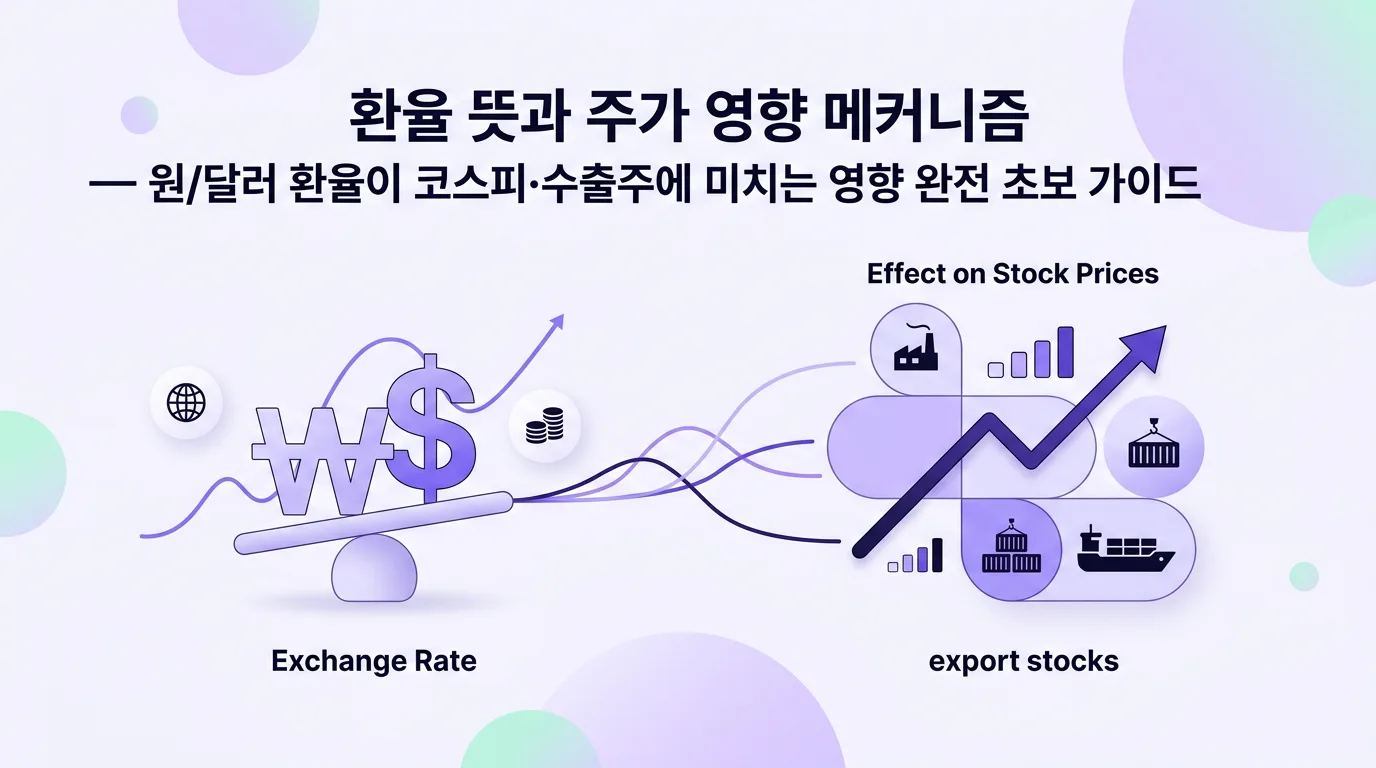
What is an exchange rate?
An exchange rate is the ratio at which two currencies are exchanged. A won-dollar exchange rate of 1,400 won means that 1,400 won are needed to buy 1 dollar. The larger the number, the lower the value of the won (won weakness); the smaller the number, the higher the value of the won (won strength).
Why a rising exchange rate is good for export stocks
Export companies like Samsung Electronics and SK hynix earn revenue in dollars overseas and pay costs in won in Korea. When the exchange rate rises, the same dollar revenue can be converted into more won, creating expectations of improved earnings. Recently, even at the 1,400 won level, the KOSPI held up as semiconductor momentum added to Samsung Electronics and SK hynix, which supports this.
The link between foreign investor flows and the exchange rate
Foreign investors send funds from their home country (dollars) and later convert to won, expecting currency gains as well. During a rising exchange rate, they may increase buying to target both "currency gains + stock price gains." Conversely, if the exchange rate spikes, selling pressure can increase due to concerns about capital outflows from emerging markets. This is why some analysts say that reaching 1,500 won could trigger foreign capital movements.
The exchange rate and KOSPI don't always move together
Textbook logic says a rising exchange rate = good for export stocks = KOSPI rises, but if the exchange rate rises too quickly, stock prices can actually plunge due to inflation and interest rate concerns and foreign outflows. As in cases where KOSPI plunged more than 5% and signals of exchange rate stabilization drew attention, speed and level matter more than direction.
Hedged ETF vs. Unhedged ETF
| Category | Currency-hedged ETF | Unhedged ETF |
|---|---|---|
| Exchange rate changes | Removed | Reflected as is |
| When investing in overseas stocks | No currency gains | Currency gains possible |
| When exchange rate rises | Only stock price reflected | Stock price + currency gains |
If you want to bet on won weakness, choose unhedged; if you want only overseas stock returns without exchange rate impact, choose hedged.
Three things for beginners to remember
- Exchange rate = thermometer of won value
- A rising exchange rate is generally good for export stocks, but if it rises too fast, it backfires
- When choosing ETFs, hedging or not determines long-term returns
Reading about the relationship between exchange rates and the stock market together with the KOSPI Sidecar Guide helps understand market structure. Real-time exchange rates and stock movements can be seen at a glance on the Daepak dashboard (/app).
※ This article is for informational purposes only and is not investment advice.